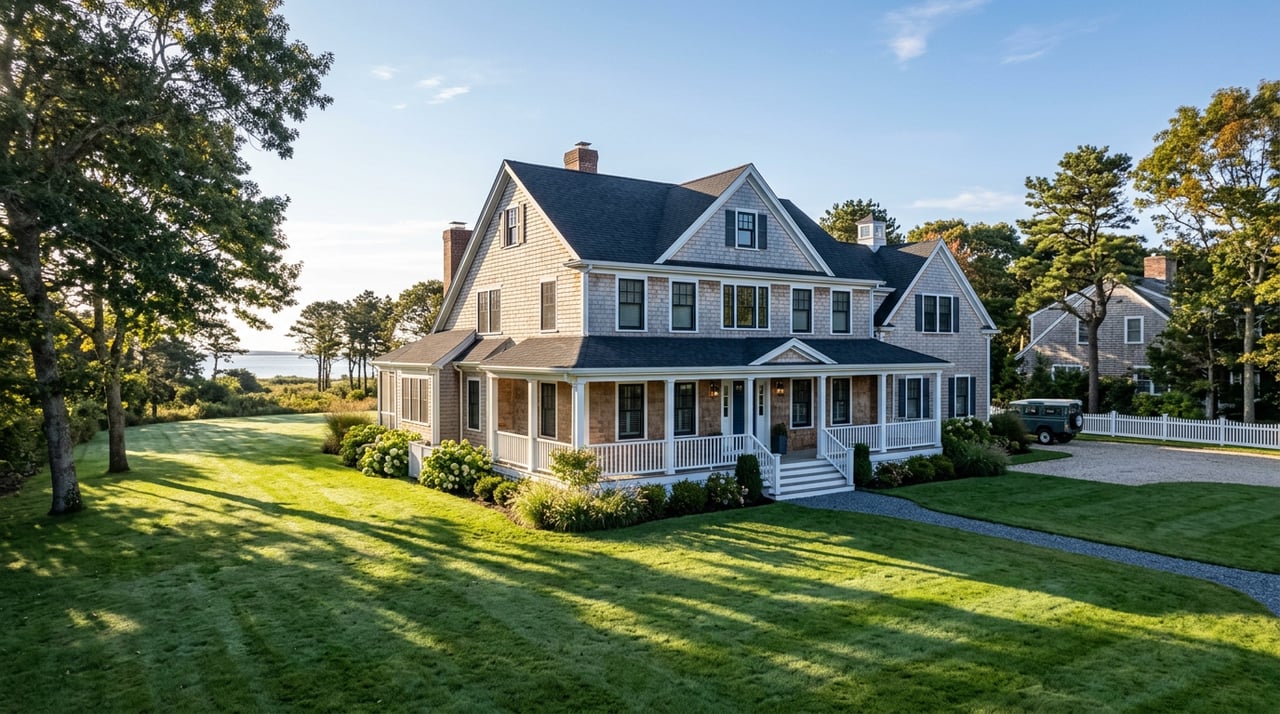
Ask what a house costs in Barnstable and you'll get an answer fast. As of August 2026, the town's median sale price sits at $705,000, with price per square foot around $478, up 16.4% from the same period last year. That number sounds like a fact you can plan around.
It isn't. Barnstable is not one town with one housing market. Its villages each have their own inventory, buyer pool, and price behavior, all folded into a single town-wide figure that tells you almost nothing about what you'll actually pay in Cotuit versus Marstons Mills versus Osterville. Worse, some of those village numbers are far more trustworthy than others, and the reason has nothing to do with the villages themselves and everything to do with how many homes actually sold.
Why One Town Median Can't Do This Job
Barnstable's seven official villages, Barnstable Village, Centerville, Cotuit, Hyannis, Marstons Mills, Osterville, and West Barnstable, plus the smaller recognized enclaves like Cummaquid, Hyannis Port, and Craigville, are distinct enough that the Barnstable County Registry of Deeds keeps a running list just to keep people oriented, since property records are filed under the town name while everyone on the ground uses the village name instead.
That split matters more than it sounds. A single square foot of house in Cummaquid has recently traded for roughly $406. The same square foot in Osterville has traded closer to $623 on the median and $715 on the average. Blend those two villages with the rest of Barnstable’s varied markets and you get a town-wide number that describes neither one. It's the housing equivalent of averaging a Fahrenheit thermometer reading from July with one from January and reporting the year as mild.
Village Prices Vary Across Barnstable
Recent closed-sales data across Barnstable's villages breaks down roughly like this:
| Village | Price per square foot | What's behind the number |
|---|---|---|
| Cummaquid | Median near $406 | Only about six sales in the dataset, large lots, the Cummaquid Golf Course and Long Pasture Wildlife Sanctuary nearby |
| Marstons Mills | Lowest average per square foot in town, in the $400s | Deep, steady inventory, horse farms, the historic Cape Cod Airfield |
| Hyannis | Also in the $400s, close to Marstons Mills and Cummaquid | High sales volume, widest range of housing stock in Barnstable |
| Centerville | Highest single-village transaction count, over 100 sales recently | Broad, dependable entry-level pricing |
| Cotuit | Median around $432, average around $506 | A $74 gap driven by waterfront sales on Cotuit Bay and Shoestring Bay |
| Hyannis Port | Median near $510, average near $857 on about seven sales | Squaw Island's oceanfront estates pull the average far above the median |
| Osterville | Average around $715, median around $623 | The most consistently premium village in Barnstable, not just outlier-driven |
Look at that table long enough and a second story emerges, one that matters more than the ranking itself.
The Real Signal Isn't the Price. It's the Gap.
In Cotuit, the average price per square foot runs about $74 higher than the median. In Hyannis Port, the average runs more than $300 higher than the median. In Marstons Mills and Centerville, average and median stay close together.
That gap size is the actual information a buyer or seller needs. A village where average and median sit close together, Marstons Mills, Centerville, most of Hyannis, is a village with enough sales volume that the "typical" price is genuinely typical. You can point to it in a negotiation and expect the other side to recognize it as reasonable.
A village where the gap is wide, Cotuit, Hyannis Port, is a village where a handful of exceptional sales are doing most of the work. Cotuit's $506 average reflects sales like a home on Putnam Avenue that closed north of $4.6 million, a transaction most Cotuit residents never see on their own street but one that still counts toward the village average. Hyannis Port's $857 average is shaped even more dramatically by Squaw Island, a private, causeway-connected enclave that carries some of the finest oceanfront addresses on the Cape, sitting inside the same Hyannis Port zip code as far more modest homes near the village center.
If you're comparing two villages and one has a small sample size with a wide average-median gap, treat the average as decoration, not data. The median, or better yet the actual comparable sales near the specific address you're considering, tells you more than either headline figure.
What Hyannis Proves About the Hub Premium
Here's the part that surprises people who assume the commercial center of the Cape should command a price premium. Hyannis houses Cape Cod Hospital, the year-round ferry terminal to Martha's Vineyard and Nantucket, the regional airport, and the only real downtown on the peninsula. By the logic that applies almost everywhere else, that kind of infrastructure should push prices up.
It doesn't. Hyannis prices closer to Marstons Mills and Cummaquid than to Osterville. The reason isn't that Hyannis lacks value. It's that Hyannis contains more housing stock and more variety than any other village in town, everything from a starter home on Suffolk Avenue to a multimillion-dollar estate on Walley Court, both carrying the same 02601 zip code. That range flattens the average toward the middle rather than pulling it toward a premium. What a Hyannis buyer actually gets at that price point is genuine year-round infrastructure at a cost that would be considered a bargain in most comparable coastal markets in New England.
Centerville tells a related story from a different angle. It's the highest-volume single village in Barnstable by recent transaction count, and that volume is exactly why its pricing holds steady rather than swinging with every closing. It isn't the flashiest village on the list. It's the one where the numbers are the most trustworthy.
Reading the Number Before You Make an Offer or Set a List Price
If you're comparing Barnstable villages, three questions will tell you more than the headline price per square foot ever will.
First, how many sales sit behind the number. A village figure built on six or seven closings, Cummaquid, Hyannis Port, can move sharply with the next sale. A figure built on over a hundred, Centerville, most of Hyannis, is far more stable.
Second, how far apart the average and median sit. A small gap means the village is pricing consistently. A large gap, like Cotuit's or Hyannis Port's, means one or two exceptional properties are carrying the average, and the median is the more honest number to negotiate around.
Third, what kind of inventory is actually driving the village's identity. Marstons Mills' low price per square foot isn't a warning sign. It reflects a village built around cranberry bogs, kettle ponds, and the working history of a onetime mill town, still visible today in its horse farms and in the Cape Cod Airfield, where biplane rides and skydiving operate out of a grass runway that dates to the 1920s. That's a different kind of value than Osterville's polish, not a lesser one.
FAQ
Is a lower price per square foot a sign that a village is a worse place to buy? Not on its own. A lower per-square-foot figure in a village like Marstons Mills or Cummaquid usually reflects more land, more entry-level inventory, or a different style of home, not a problem with the village. Osterville's premium reflects its own inventory and buyer pool just as legitimately as Marstons Mills' accessibility reflects its.
Why do villages that share a town, and sometimes a zip code, price so differently? Because they aren't the same market. Hyannis Port and the rest of Hyannis share a zip code but almost nothing else in housing stock. Squaw Island's oceanfront estates and a starter home near the village center both count toward the same average, which is exactly why the median, and the actual comparable sales, matter more than the headline number.
Should I trust a village's average or its median? Check the sales volume first. With a large, active sample, like Centerville or most of Hyannis, average and median tend to agree and either is useful. With a small sample, like Cummaquid or Hyannis Port, lean on the median and look at the individual comparable sales directly, since a single high-end closing can swing the average on its own.
If you're weighing which Barnstable village actually fits your budget and your plans, the town-wide number won't get you there. The village-level detail, and the comparable sales inside it, will. Tori Harrison Properties works these villages street by street. Let's connect, get your instant home valuation, and find out what your money actually buys in the village you're considering.